Anna Sushko
Voices from ChernobylAnna Sushko is a villager from Kozhushki whose fate after her removal during the Chernobyl evacuations remains unknown. The book presents her through a neighbor’s urgent appeal to locate her: a woman known to her community, cared for there, and then carried away from it without a trace her neighbors could follow.
Identity and Life in Kozhushki
At the time of the transfer, Sushko was sixty. She had a hump, had been mute from birth, and lived by herself. She had never learned to read, a detail that would leave her unable to send the letters her neighbors hoped might tell them where she had gone. These facts reach the reader through Anna Petrovna Badaeva, identified as a re-settler, who asks that Sushko’s appearance and name be written down so she can be found.
Sushko’s solitary household did not mean she was left alone by the village. Neighbors took responsibility for her daily needs: one person chopped wood, another brought milk, and someone would spend an evening with her, heating the stove. Badaeva recalls this care as a collective practice, describing the villagers as looking after Sushko like a little girl. Her life in Kozhushki was thus sustained by ordinary acts shared among neighbors, rather than by any account of formal support.
Removal and the Search
During the transfer, Sushko was put into an ambulance and driven away to an unknown destination. Badaeva says that lonely and sick people were taken to special places and hidden, but she does not know where Sushko was sent. Because Sushko could not read, the village received no letters from her; the testimony offers no address, later contact, or confirmation of what became of her.
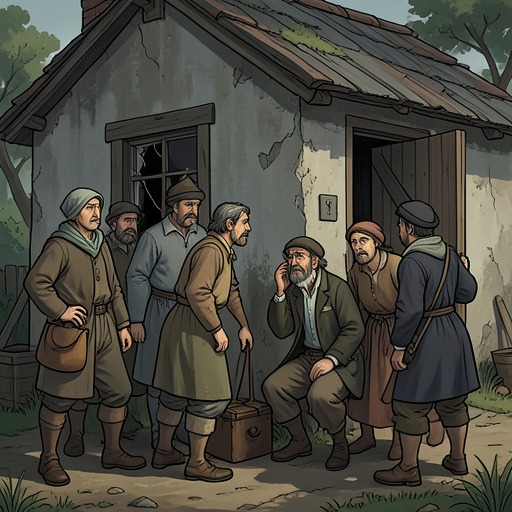
The villagers spent two years living elsewhere before returning to their homes. When Badaeva speaks, the house Sushko left behind is still there: the roof and windows remain, and the neighbors say they can repair what has been broken or stolen. Their offer to go and bring her back depends on a single missing piece of information—where she is. The surviving home makes the uncertainty sharper: a place to return to exists, but the person who might return cannot be found.
The Wordless Song and the Testimony
Badaeva remembers that when something hurt Sushko, she sang. Since she could not speak, the song had no words; it was a voice made audible as a simple repeated sound. The testimony does not claim that this song explained Sushko’s feelings. Instead, it preserves a distinctive detail of how she responded to pain, in a narrative otherwise dominated by the inability to reach her or hear from her.
The account is shaped as a plea rather than a completed history. Badaeva asks that Sushko be found and that the village’s willingness to welcome her back be made known. She fears that Sushko is suffering among strangers and that grief may kill her, but the book supplies no resolution to that fear. Sushko remains present through her neighbors’ precise memories and care, while her location and fate remain unanswered.